
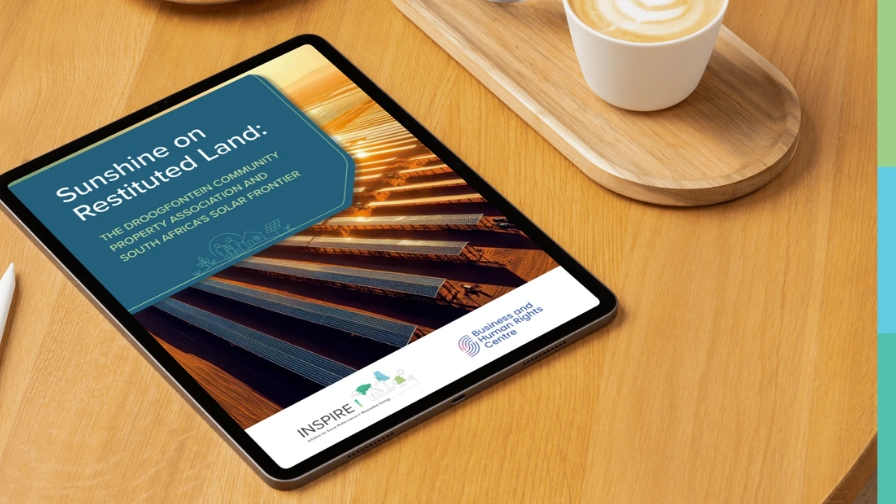
Across South Africa, large-scale renewable energy projects are creating new relationships between communities, developers, investors and landowners. But community participation can look very different when the community itself owns the land on which renewable energy infrastructure is developed.
Sunshine on Restituted Land: The Droogfontein Community Property Association and South Africa’s Solar Frontier explores this dynamic through the experience of the Droogfontein Community Property Association in the Northern Cape.
The DCPA’s journey began with land restitution. Following decades of dispossession, more than 12,000 hectares of land were officially restored to the community in 2006. As South Africa’s renewable energy sector expanded in later years, the land subsequently became the site of utility-scale solar development.
The DCPA’s position as a landowner created opportunities to participate in renewable energy development in ways that extended beyond mandatory community benefit-sharing. But those opportunities also brought complexity. The organisation had to learn how to navigate long-term commercial agreements, engage with developers, manage community-owned assets, and balance expectations around immediate benefits with longer-term development.
Drawing on interviews with people with direct knowledge of the DCPA’s journey, the case study examines these experiences and identifies lessons that may be relevant to other restituted and community landholding entities considering similar partnerships.
The Droogfontein story demonstrates that renewable energy development on community-owned land is about more than electricity generation. It raises broader questions about ownership, negotiation, institutional capacity, community development, and the role communities can play in shaping investments taking place on their land.
Read the case study and explore the lessons emerging from the Droogfontein experience:
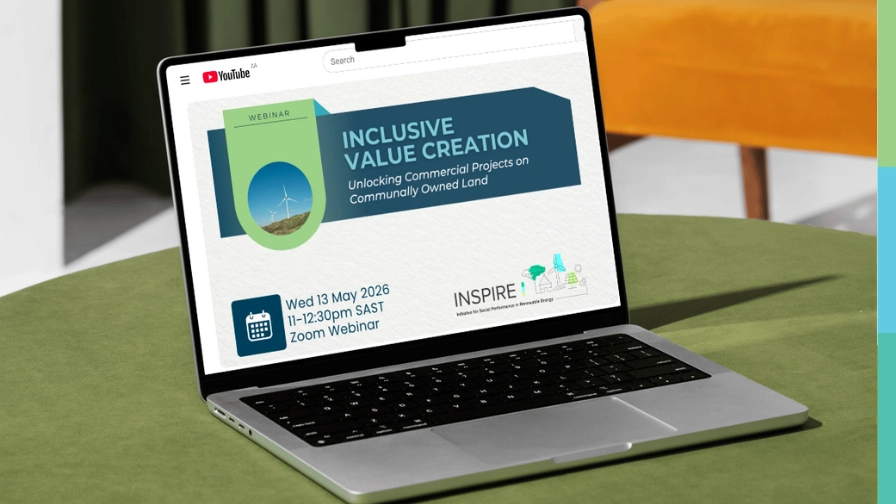
![Unlocking Value [-Creation] Through Renewable Energy Projects on Communally Owned Land: Insights from the Land Matters Roundtable](https://inspire-excellence.net/wp-content/uploads/2026/08/Land-Matters-Roundtable-2026.webp)