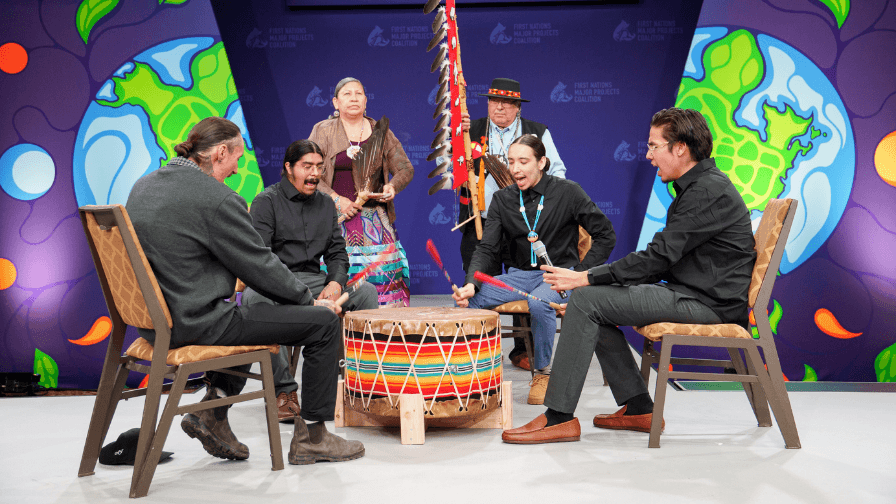
From 29 April to May 1, our Managing Director Holle Wlokas, attended the First Nations Major Projects Coalition (FNMPC) Conference in Canada. Attendance to this conference could not have been timelier as South Africa prepares for its anticipated transmission line auction programme later this year.
The 9th Annual FNMPC conference, titled THE NEXT SEVEN GENERATIONS: OUR SHARED FUTURE, focused on rising pressures over energy, resources, climate and security, bringing together First Nations, industry and government leaders from around the world to define what wise commercial choices look like in practice.
Among those in attendance at the conference were Kgosi Leruo Molotlegi, King of the Royal Bafokeng Nation in South Africa and Māori Queen from New Zealand whose presence was especially significant as they both represent Indigenous Nations. They both gave remarkable speeches – foregrounding the need for long-term vision (7 generations ahead) and strategic investment decisions. Both leaders echoing that First Nations communities are not stakeholders to be managed or passive shareholders, they are increasingly project initiators, equity partners and co-governors of large-scale renewable energy and grid infrastructure.
Discussions focused on how major mining, energy and transmission projects are being structured, financed and governed, with Indigenous Nations acting as owners and decision-makers. Case studies from Canada and other regions illustrated how equity participation and Indigenous-led infrastructure are being delivered at scale. Additional sessions explored participation in global trade and the role of Indigenous youth in shaping future industries. This shift has accelerated significantly over the past 3-5 years. Projects are built faster, with less resistance, stronger social licence, and a real sense of empowerment and opportunity for reconciliation and deep/structural economic transformation.
At the conference, FNMPC launched a new paper on Indigenous-led Transmission Lines, which is directly relevant as South Africa anticipates its own transmission line auction programme to open later this year. The question for our sector is whether we will default again to passive community shareholding, or whether we will use this moment to design something more ambitious.
We are particularly encouraged to reflect on how these principles and lessons can inform our work in South Africa, particularly our work with industry as well as community shareholders and landowners in INSPIRE’s Trust Matters and Land Matters initiatives.
Thank you to the First Nations Major Projects Coalition for hosting such an impactful conference and welcoming us as international visitors.